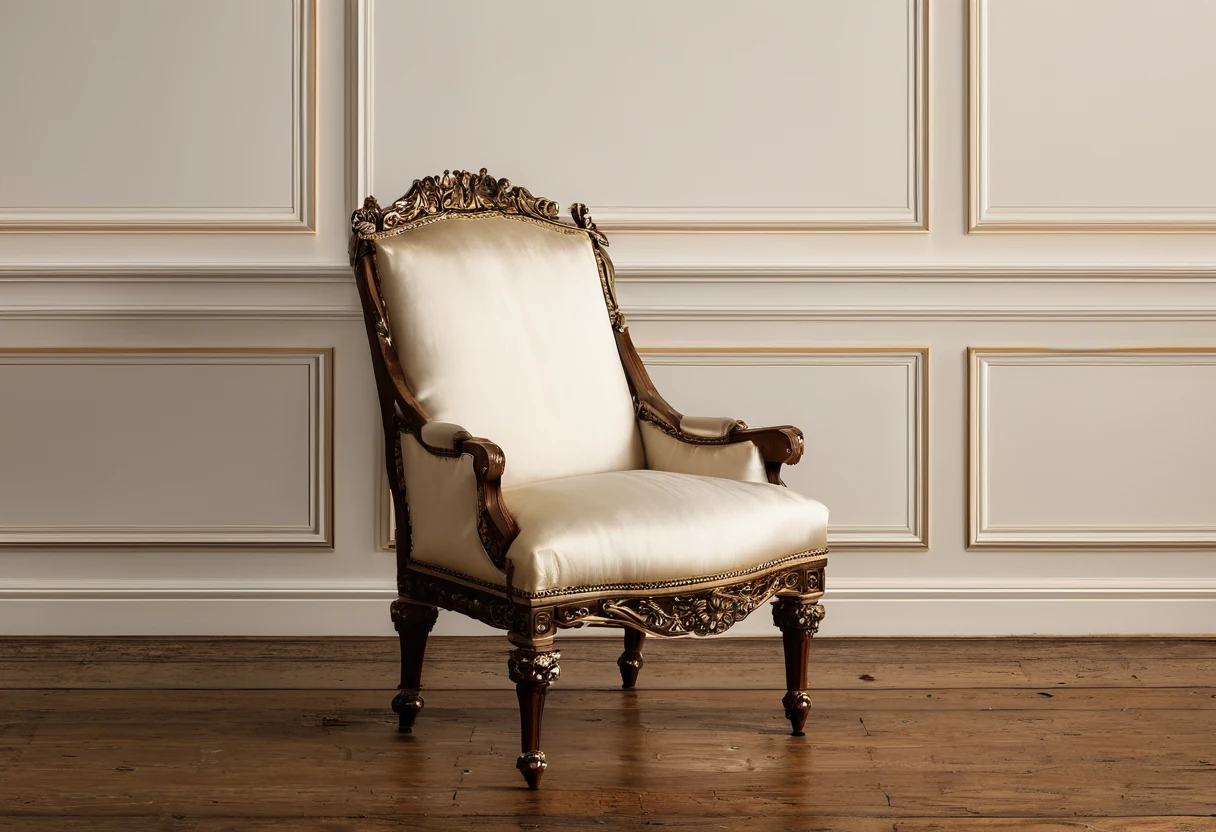
A fully hand-carved walnut armchair from a northern Italian workshop retails between €18,000 and €25,000, the price of a new compact car. The price is not a branding exercise: the chair absorbs 150 to 250 working hours across at least six specialist trades before it reaches a showroom. This article takes one representative €20,000 armchair apart, link by link, and shows where every euro sits. For readers studying how this level of craft appears in current production, Modenese Furniture is a useful reference point for Italian classic furniture, carving, finishes and room-scale collections.
A note on method: the figures below form a transparent cost model built on mid-range rates for premium hardwood, gold leaf, silk and skilled labor in northern Italy as of 2026. Individual workshops sit above or below each line, but the proportions hold across the high-craft furniture sector.
The Six-Link Value Chain Behind a €20,000 Armchair
High-craft furniture pricing follows a six-link chain: timber selection, drying, frame joinery, carving, finishing with gilding, and upholstery with final quality control. Labor dominates every link. At loaded workshop rates of €35 to €60 per hour, the 150 to 250 hours inside one armchair represent €6,000 to €12,000 of labor before any walnut, gold or silk is counted.
Link 1: Timber Selection, Where Carving-Grade Walnut Costs €1,500 to €2,500 per Cubic Meter
Carving-grade European walnut, kiln-dried and free of knots in the carving zones, trades at €1,500 to €2,500 per cubic meter in 2026, with exceptional figured boards priced well above that range. One armchair consumes roughly 0.2 cubic meters of that stock, because deep-relief carving requires thick, defect-free sections and produces more than 50 percent waste by volume. A timber buyer with a decade of experience spends 4 to 8 hours selecting and matching boards for color and grain direction on a single important chair. Walnut is chosen over harder species for a measurable reason: at roughly 1,010 lbf on the Janka hardness scale, walnut holds crisp detail yet still yields to a gouge in a controlled way.
Share of final price: 3 to 5 percent. The lesson of link 1 is uncomfortable for cost-cutters: the most photographed material in the chair is among its smallest cost lines.
Link 2: Drying, the Year the Buyer Never Sees
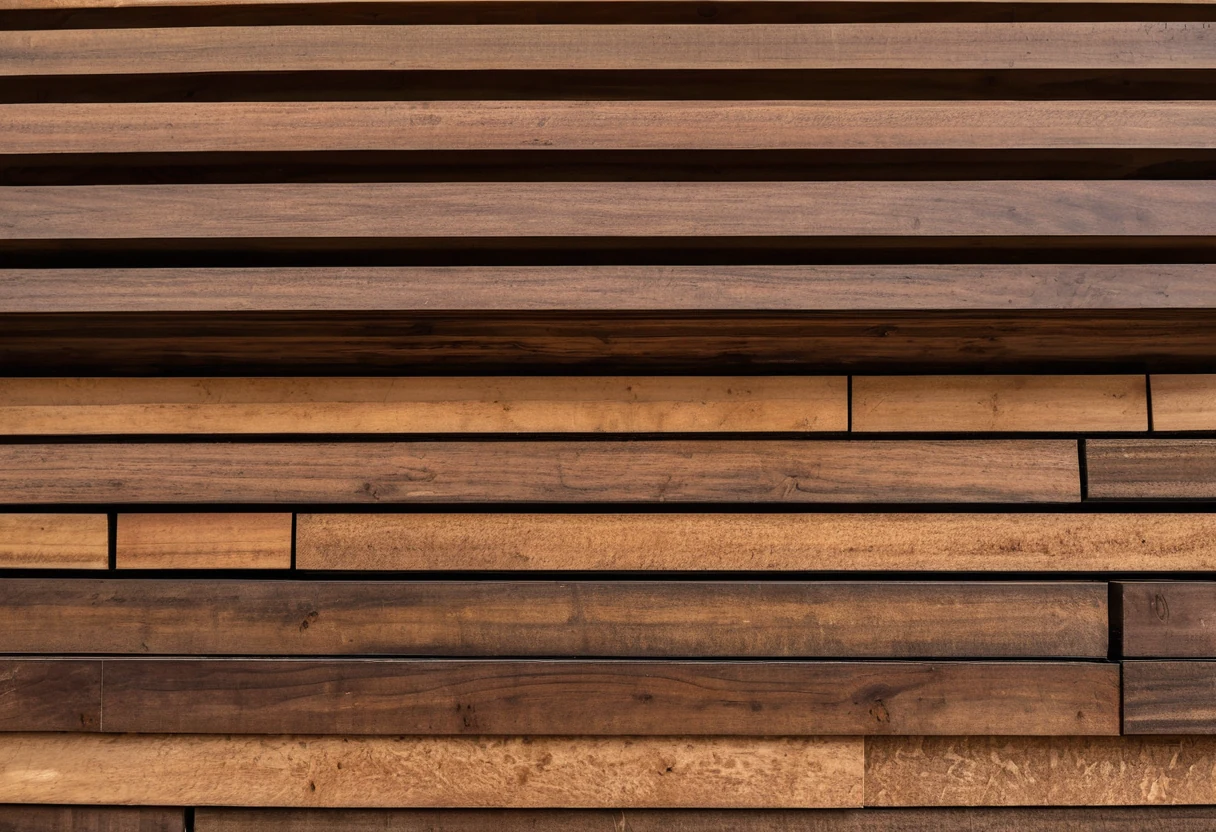
Freshly sawn walnut cannot be carved into furniture that survives central heating. Standard practice combines air seasoning, at the traditional rate of about one year per 25 millimeters of board thickness, with kiln drying for 4 to 8 weeks until the wood reaches 8 to 10 percent moisture content, the equilibrium range for heated interiors. Wood drying is slow because rushing it causes case-hardening, internal checking and warp, defects that surface months later as cracked carvings. Drying adds little direct labor, but it ties up capital and warehouse space for one to three years before production begins.
Share of final price: 2 to 3 percent, mostly carried as financing and storage cost. A factory copy skips this link almost entirely by using kiln-rushed rubberwood, MDF cores or pre-dried commodity veneer, which is one reason the copy can move within a season of delivery.
Link 3: Frame Joinery Takes 20 to 30 Hours of Bench Time
The structural frame of a high-craft armchair is cut oversize, machined close, then fitted by hand with mortise-and-tenon joints, glued and clamped in sequence so the frame stays square under load. A master joiner spends 20 to 30 hours on one armchair frame, including the invisible work: corner blocks, grain orientation chosen so seasonal movement tightens rather than opens the joints, and dry-fitting every joint before glue. Factory equivalents rely on dowels, staples and hot-melt adhesives, which cut bench time to under two hours and survive roughly one re-upholstery cycle.
Share of final price: 12 to 15 percent.
Link 4: Carving, 60 to 120 Hours by the Highest-Paid Hands in the Building
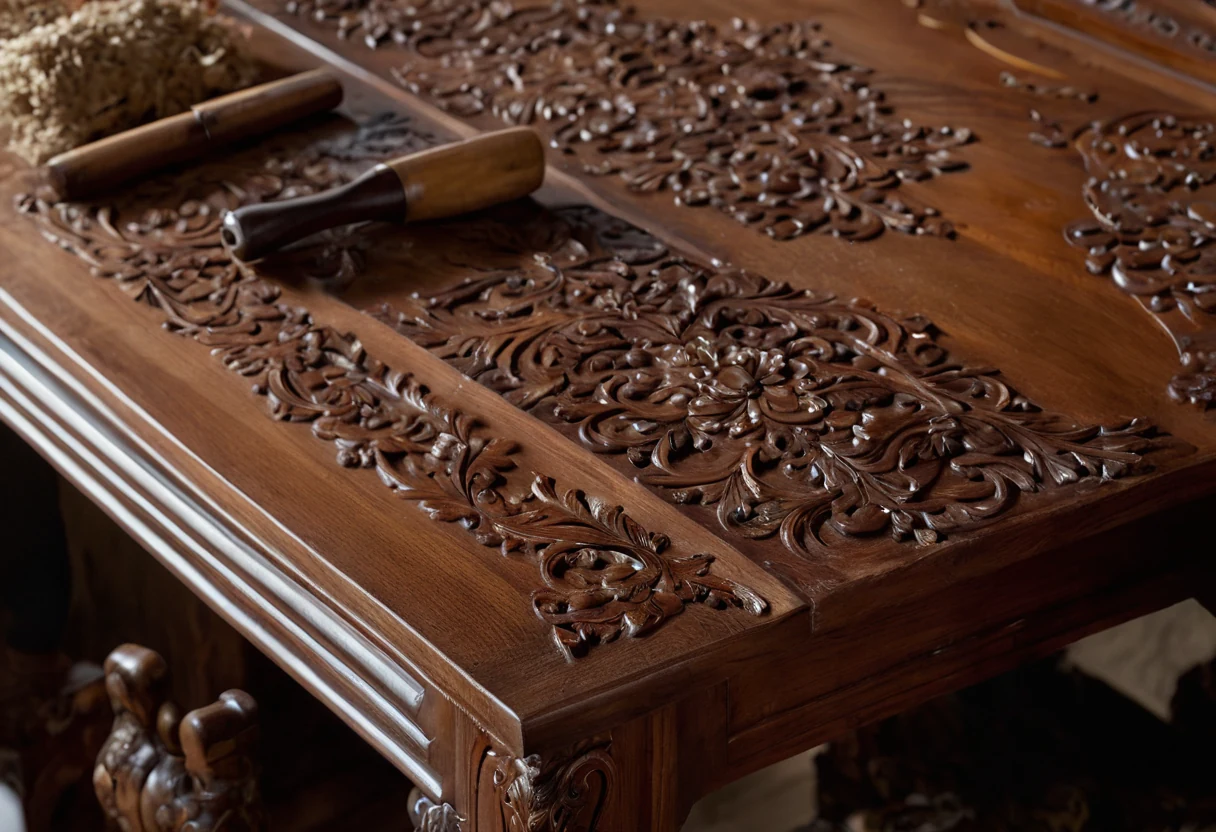
Hand carving is the cost center that defines the category. A full-relief armchair, with scrolled arms, carved crest rail, cabriole legs and continuous ornament, takes a master carver 60 to 120 hours with gouges and mallets, after an apprenticeship that in Italian workshops historically runs seven to ten years. Workshop pages that document hand carving stage by stage show why the hours accumulate: each motif is drawn on the wood, roughed out, modeled, then detailed in passes, and a slip in hour 90 can scrap the component.
This link is also where the factory copy becomes a physically different product rather than a cheaper version of the same one. Mass-market “carved” ornament is either CNC-routed and lightly sanded, which leaves uniform tool marks and shallow relief, or cast in polyurethane resin and glued onto the frame. Resin ornament cannot be recut, refinished or repaired; carved walnut can be restored repeatedly for a century or more.
Share of final price: 15 to 30 percent.
Link 5: Finishing and Gilding, Where €2 Gold Leaves Add Up
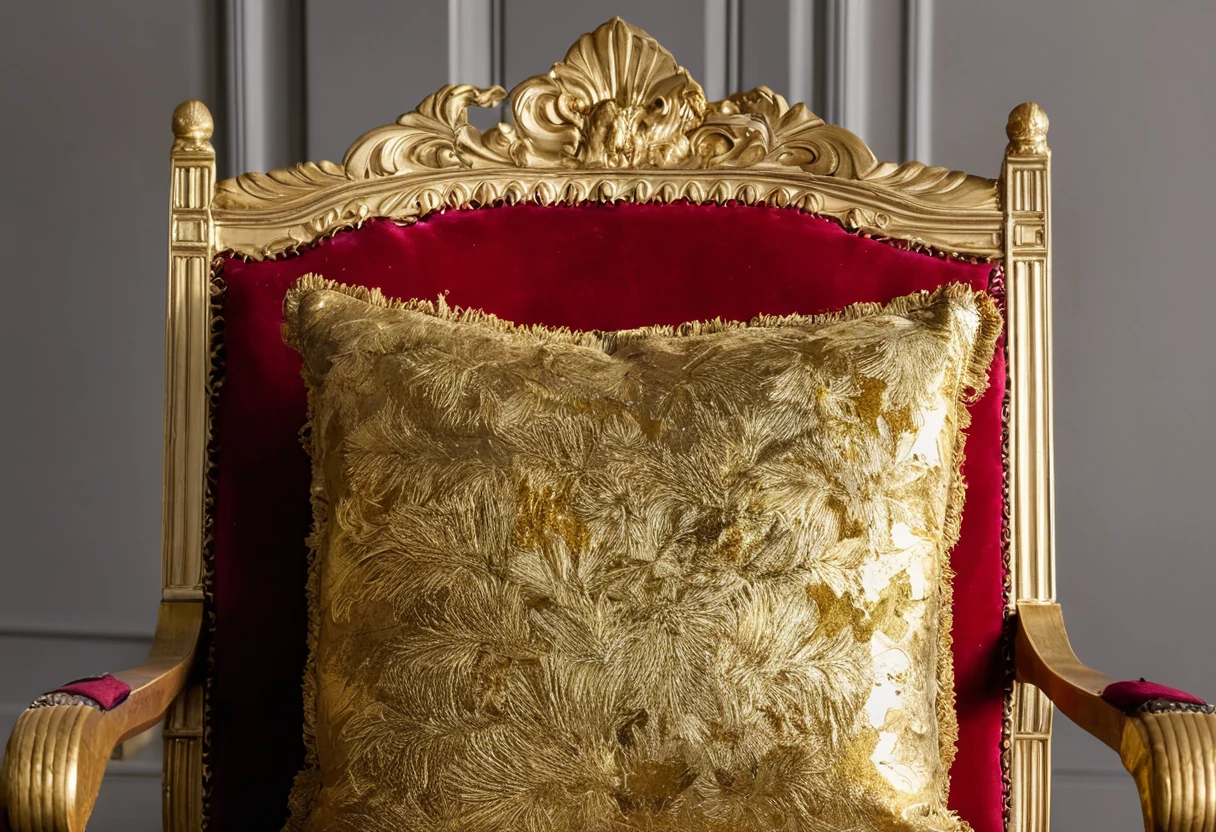
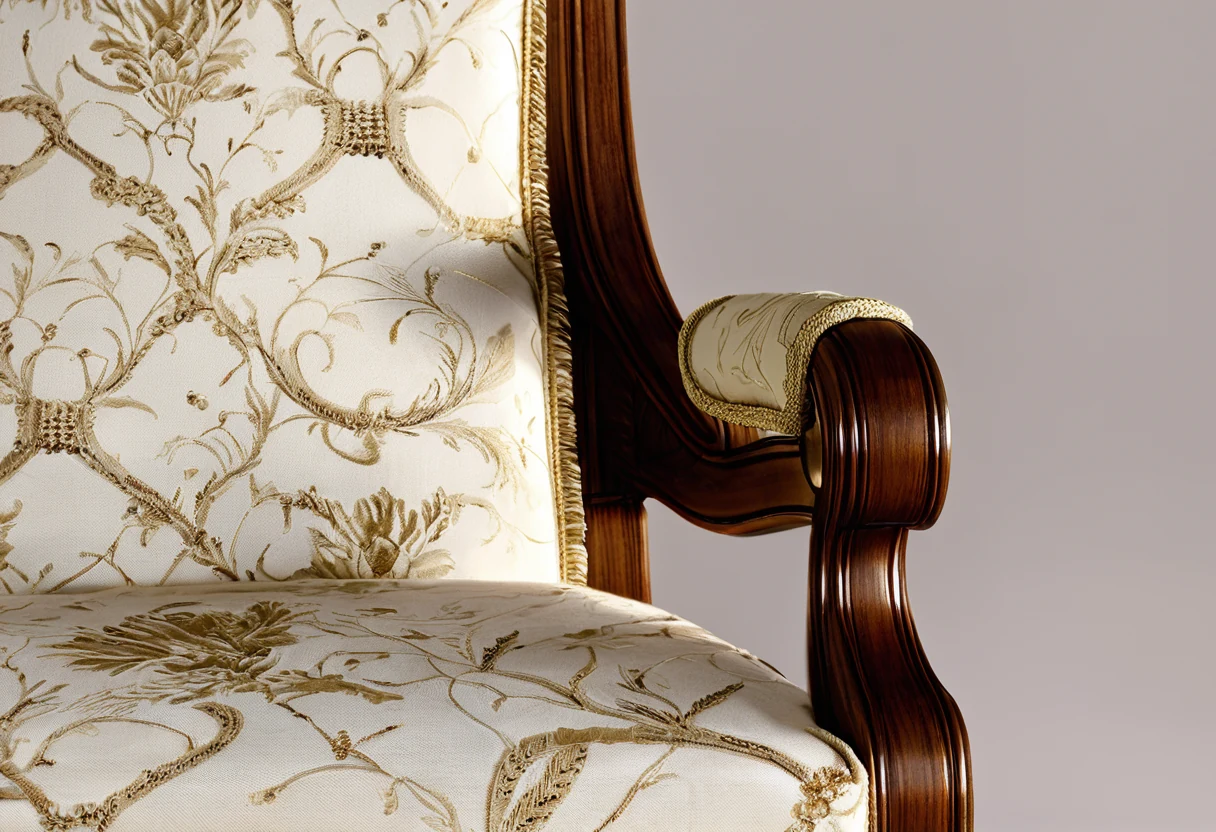
High-craft finishing is a layered system, not a sprayed coat: staining, grain filling, multiple coats of shellac or catalyzed lacquer with sanding between coats, and hand-applied patina that shades recesses to make the carving legible. Where the design calls for gold, water or oil gilding uses genuine 23.75-karat gold leaf in 80-by-80-millimeter sheets costing roughly €1.50 to €2.50 each, and an armchair with gilded detailing consumes 150 to 400 leaves. Finishing and gilding together absorb 25 to 40 hours per chair. The factory substitute is bronze-powder or mica “gold” paint, which costs cents per chair and visibly darkens as the metal powder oxidizes; genuine gold leaf does not tarnish.
Share of final price: 10 to 15 percent.
Link 6: Upholstery and Final Control, the Last 15 to 25 Hours
Traditional upholstery is structural work: jute webbing, hand-tied spring systems, natural fillings built up in layers, then the show cover. Upholstery-grade silk jacquard runs €150 to €400 per meter, and an armchair takes 3 to 5 meters with pattern matching. The upholsterer and the finishing inspector together spend 15 to 25 hours per chair, ending with a documented inspection of joints, finish, symmetry and seam alignment. Mass production replaces this with serpentine springs, molded foam and 1.5 hours of line time.
Share of final price: 10 to 15 percent.
Where the Remaining 30 to 40 Percent Goes
Adding the six links accounts for roughly 60 to 70 percent of the €20,000 retail price. The remainder covers design and pattern development amortized over a small series, showroom and presentation costs, export-grade packing, white-glove logistics, duties, warranty reserves and the workshop’s margin. The honest summary: in high craft, the margin percentage is usually thinner than in mass furniture retail, where a €3,000 “Italian style” chair can carry a 60 to 70 percent gross margin on a €600 landed cost.
Handmade Versus Mass-Market Copy: Six Parameters Compared
The comparison below contrasts the modeled €20,000 hand-carved armchair with a typical €2,500 to €3,500 mass-produced lookalike. The two objects share a silhouette and almost nothing else.
| Parameter | Hand-carved original | Mass-market copy |
|---|---|---|
| Material | Solid kiln-dried walnut, 8-10% moisture content | Rubberwood, MDF, commodity veneer |
| Construction | Mortise-and-tenon, corner blocks, hand-fitted | Dowels, staples, hot-melt adhesive |
| Ornament | Hand-carved in the solid, 60-120 hours | CNC-routed or glued polyurethane castings |
| Finish | Layered shellac/lacquer, hand patina, 23.75k gold leaf | Sprayed polyurethane, bronze-powder paint |
| Upholstery | Hand-tied springs, natural fillings, silk at €150-400/m | Serpentine springs, molded foam, polyester at €8-20/m |
| Serviceability | Recarvable, refinishable, re-upholsterable for 100+ years | Non-serviceable; typical life 5-10 years |
The 50-Year Math: €480 a Year Against a Replacement Treadmill
Cost of ownership reverses the sticker-price verdict. The hand-carved armchair at €20,000, plus one professional re-upholstery near year 25 (about €2,500) and one finish revival (about €1,500), totals €24,000 over 50 years, or €480 per year, and the chair still exists at the end, repairable and saleable. The €3,000 copy replaced every 8 to 10 years costs €15,000 to €18,000 over the same period, ends each cycle as landfill, and carries no resale value at any point. Dealers in the secondary market routinely price documented pieces from recognized workshops at 30 to 60 percent of current replacement cost, which means the original’s effective 50-year cost can fall below the copy’s.
The car comparison that frames this article ends in the chair’s favor on one decisive axis: a compact car loses most of its value in a decade and is engineered for retirement. A hand-carved chair is engineered, joint by joint and leaf by leaf, for the opposite outcome.
High-craft products need more than beautiful photography online; ecommerce seo helps explain materials, value, and category intent for buyers who research before contacting a maker.