Can floor mirrors brighten a dark room without glare or false brightness? Yes, when the mirror reflects useful daylight onto surfaces people use, not just a window back into the room.
Can floor mirrors actually make a dark room brighter?
Floor mirrors can make a dim room feel brighter by redirecting existing daylight, but they do not create light or replace a lighting plan.
Floor mirrors amplify available daylight; they do not replace lighting design
A floor mirror works as an optical surface. Heliyon daylight research via PMC links daylight factor metrics to window area, glazing transmittance, room surface area, and visible sky. The useful question is whether the desk, sofa, vanity, reading chair, or route receives more usable light.
| Measure | What floor mirrors can change | What to check |
|---|---|---|
| Perceived brightness | The room may look brighter if the mirror shows sky, pale paint, or curtains | Eye comfort from seats and entries |
| Task illuminance | Improves only if reflected daylight reaches the task surface | Lux at desks, vanities, chairs, and routes |
| Daylight over time | Changes with cloud, sun position, orientation, and hour | CIE 15 standard sky conditions |
False brightness happens when the mirror shows the window but the work surface stays dim
False brightness is the apartment effect where a mirror doubles the window while the desk, sofa corner, hallway, or dressing zone remains underlit. Placement must answer one question: where can the mirror send daylight without sending glare into eyes?
Where should floor mirrors be placed to reflect daylight without glare?
Floor mirrors usually work best beside or perpendicular to a window, aimed toward matte plaster, flat paint, a pale ceiling, sheers, or curtains rather than a seated face.
Place floor mirrors adjacent to windows when the room needs softer reflected daylight
The safest default is a floor mirror on the wall next to the window, or slightly forward of the window reveal. On a plan, mark the window, mirror, sofa, screen, and likely reflected direction before moving furniture.
- North-facing rooms: spread cool, even daylight onto a warm matte wall or pale curtain.
- East-facing rooms: test morning sun at breakfast, dressing, and desk-use times.
- West-facing rooms: treat evening sun as the glare risk; use sheers, solar shades, exterior shading, or louvers first.
- South-facing rooms: check seasonal sun height, because winter sun can reach deeper and lower.
Use angled floor mirrors only when the reflected beam lands on a matte surface
The incoming angle and outgoing angle match. Aim the bounce at plaster, flat paint, a light ceiling, or fabric. Avoid glossy tile, polished stone, glass tables, chrome fittings, television screens, and framed art under glass.
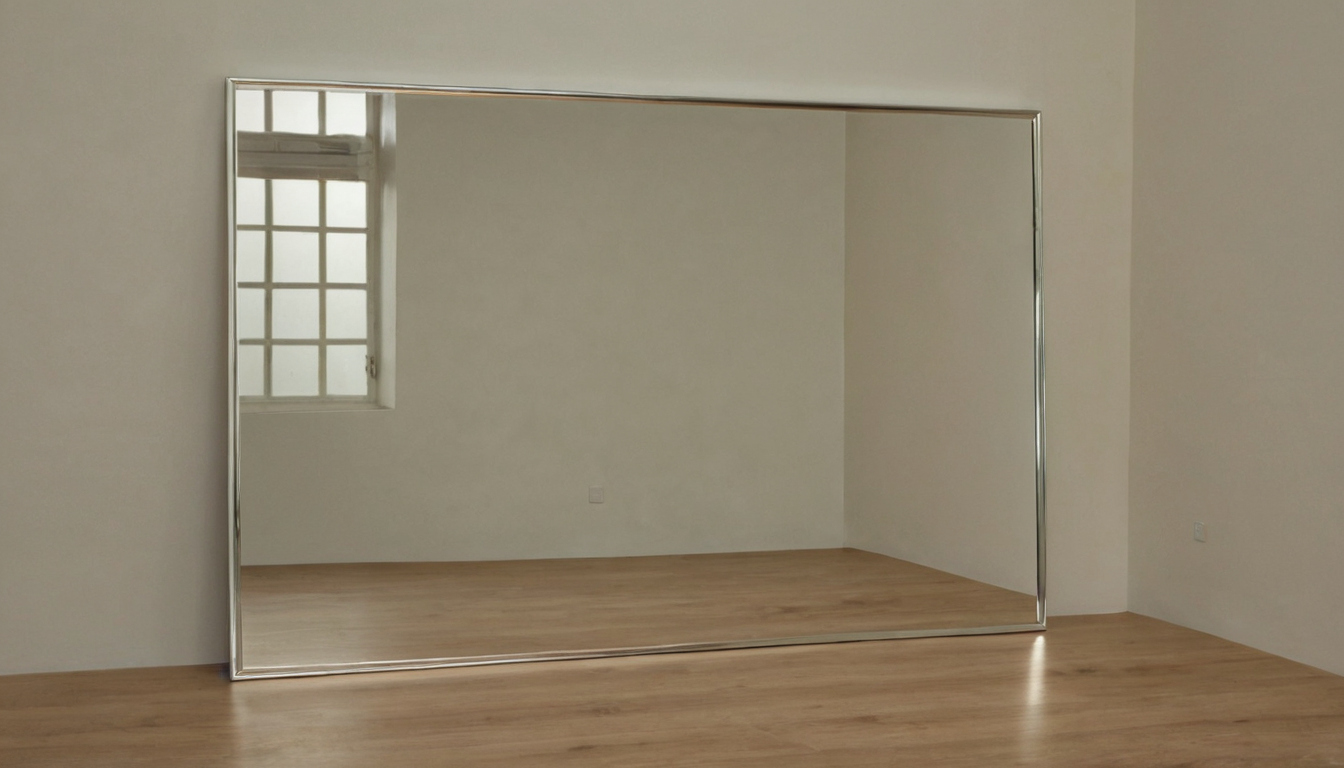
Where should floor mirrors be placed to reflect daylight without glare shown with practical context cues.
Avoid placing floor mirrors directly opposite harsh sun unless glare is controlled
Directly opposite a window often makes the room look brighter while the sofa, desk, or dining chair receives reflected glare. Floor mirrors also do not replace efficient electric lighting; ENERGY STAR states that qualified LED lighting uses at least 75 percent less energy and lasts up to 25 times longer than incandescent lighting. Near bathrooms, check moisture; the U.S. Environmental Protection Agency advises fixing wet or damp spots promptly to prevent mold growth.
Where should floor mirrors not be placed in a home?
Floor mirrors should not sit where they reflect direct sun into seated eyes, beds, screens, stairs, doors, dining faces, or private interior views.
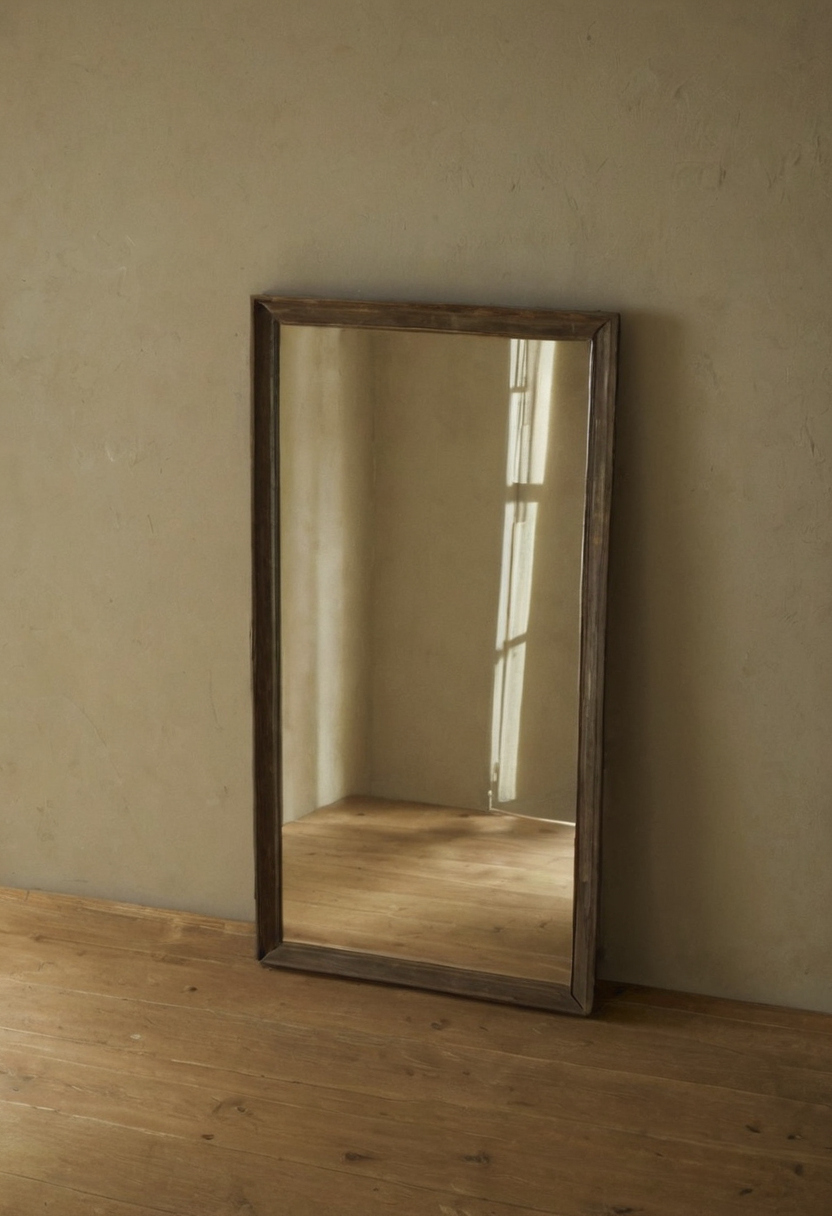
Where should floor mirrors not be placed in a home shown with practical context cues.
- Reject the position if a person on the sofa, dining chair, bed, desk chair, or lounge chair sees the window as a bright patch in the mirror.
- Avoid television walls, monitors, glossy framed art, glass-fronted cabinets, stair landings, narrow entries, and door swings.
- Do not rely on a leaning mirror in a family route. Use wall anchoring where children, pets, elderly users, or cleaners pass.
- Avoid reflected direct sun on waxed wood, leather, books, artwork, or delicate textiles.
- Reject angles that reveal bedrooms, bathroom doors, dressing zones, private corridors, laundry, or service areas from an entry or reception seat.
Which floor mirror specifications change the daylight effect?
The daylight effect of floor mirrors depends on size, glass type, tint, edge treatment, frame depth, backing, tilt hardware, and installation method.
Clear mirror glass gives the strongest daylight return but the highest glare risk
Clear mirror glass is the strongest daylight amplifier for shaded windows, north-facing rooms, and spaces with sheer curtains or diffuse sky. It also creates the highest glare risk when direct sun or bright sky enters the reflection.
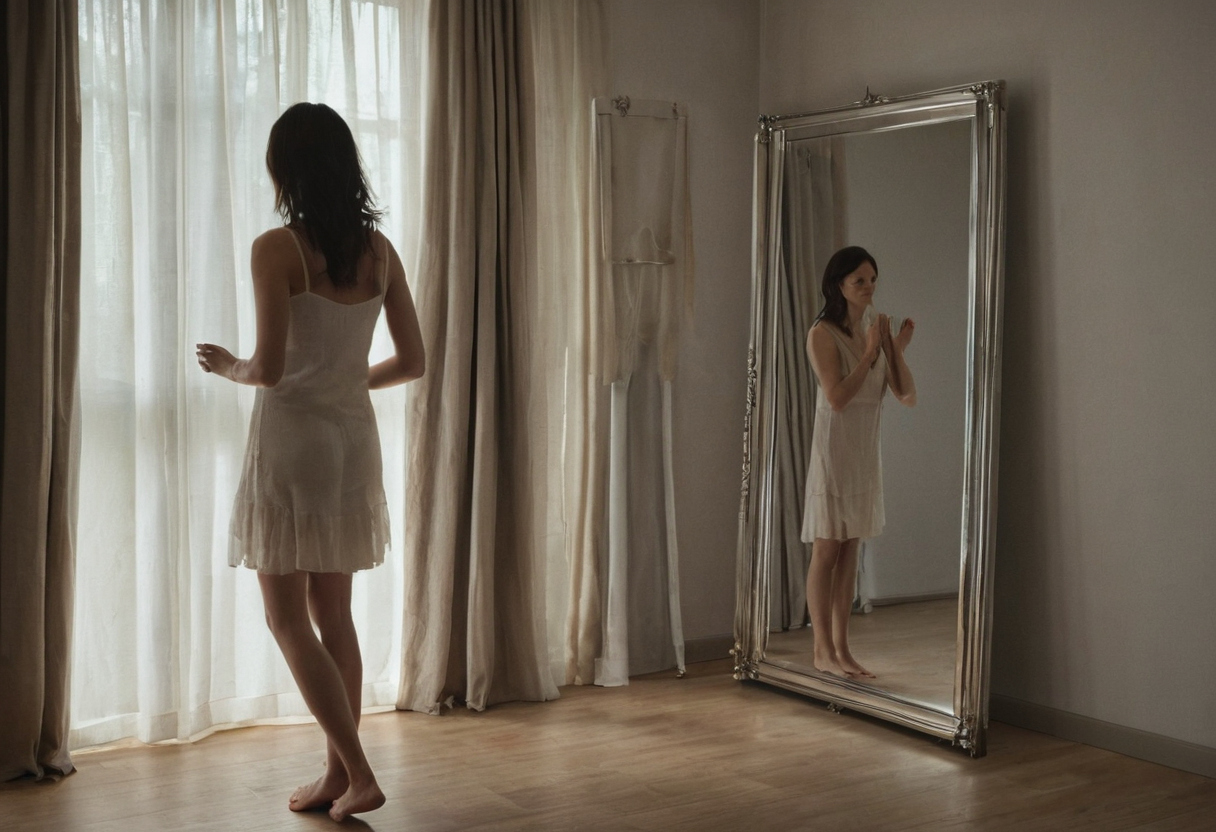
Which floor mirror specifications change the daylight effect shown with practical context cues.
| Specification | Daylight effect | Procurement note |
|---|---|---|
| Clear mirror | Strongest bounce, highest glare risk | Ask for safety backing |
| Low-iron mirror | Cleaner color return near pale finishes | Often custom or higher cost |
| Smoked or bronze mirror | Softer contrast, lower brightness | Check samples at different times |
| Antique mirror | Broken reflection, little reliable daylight gain | Avoid for desks, vanities, and reading zones |
| Safety-backed mirror | Optical effect depends on front glass | Specify backing, anchors, and weight limits together |
Tinted and antique floor mirrors reduce glare but also reduce useful brightness
Tinted, bronze, smoked, and antique mirrors can calm a bedroom or lounge because the reflected window is less sharp. The trade-off is lower reflected brightness at the desk, dressing table, or dark route.
Safety backing and anti-tip fixing are part of the specification, not an optional accessory
Large residential floor mirrors need specification as furniture and glass. Confirm glass thickness, finished weight, backing film, frame rigidity, anchor type, skirting clearance, and whether the mirror leans or hangs from a cleat.
How should you test floor mirror placement before buying or drilling?
Test placement with a temporary reflective panel, painter’s tape, phone-based lux comparisons, and eye-line checks at the times the room is used.
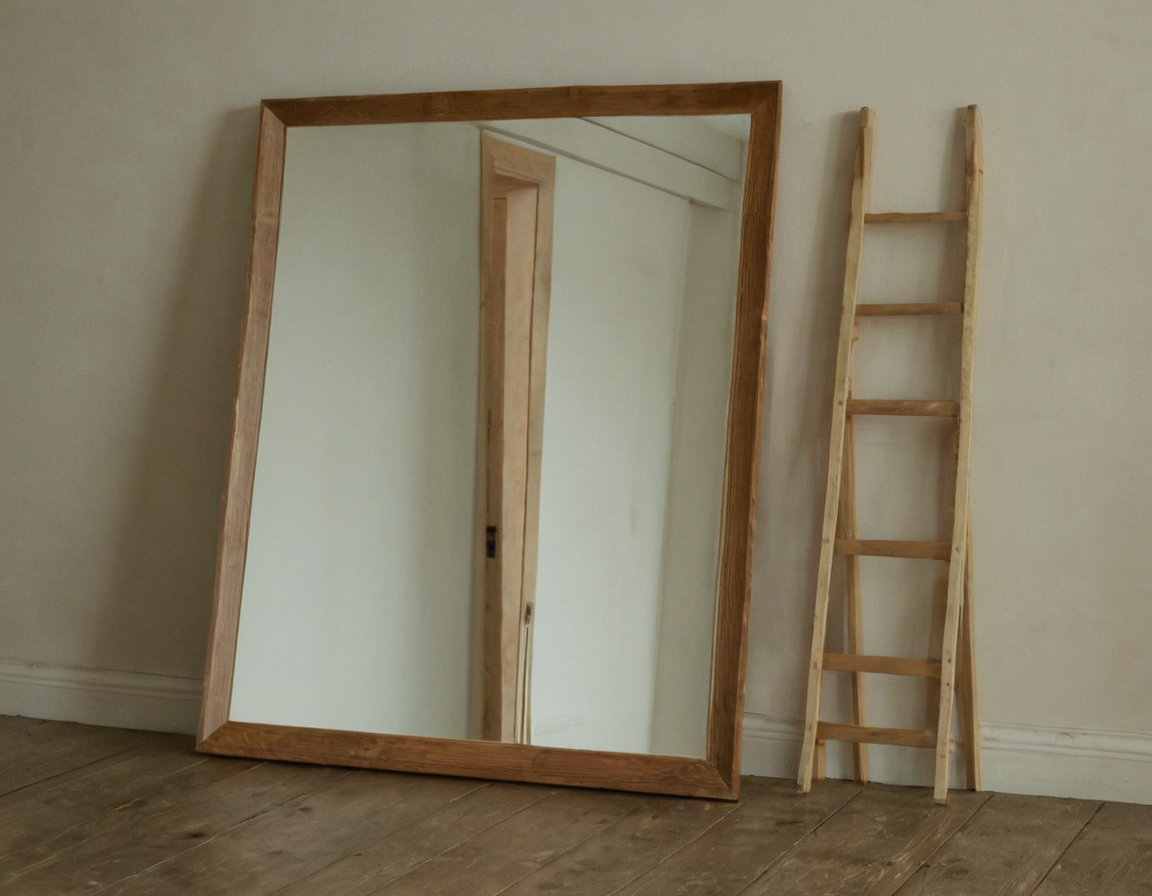
How should you test floor mirror placement before buying or drilling shown as an editorial planning reference.
Measure the task surface, not just the middle of the room
Place the temporary mirror where the real mirror would stand, tape the proposed height and width, then record before-and-after readings at the reading seat, desk, dining table, dressing zone, hallway path, and entry console. A phone lux meter is useful for comparison, not certification. Keep the phone in the same position and note time, weather, window treatment position, glare, and distraction.
Check the reflection from every normal sitting, standing, and entry position
Photograph the reflection from the doorway, sofa, bed, dining chair, desk chair, stair landing, and hallway approach. East rooms need early checks, west rooms need late checks, and south-facing rooms need midday checks where direct sun is possible. Reject any position that narrows circulation, invites climbing, or cannot accept anti-tip fixing.
How do floor mirror rules change by room type?
Floor mirror placement changes by room because each space has different eye lines, privacy needs, circulation paths, and task-lighting requirements. For related context, review villa reception rooms and guest-route privacy.
| Room type | Placement rule |
|---|---|
| Living room | Side wall, not TV wall |
| Bedroom | Dressing wall, not bed-facing |
| Entry | Anchor outside the door swing |
| Hallway | Keep walking width visually clear |
| Dining room | Avoid faces and glossy art |
| Dressing area | Prioritise even vertical light |
| Bathroom-adjacent zone | Use a dry, ventilated wall |
| Villa reception room | Protect guest routes and private views |
Living rooms benefit from floor mirrors that bounce daylight onto side walls
Living rooms work best when floor mirrors send daylight onto matte plaster, pale paint, or curtains beside the seating group. Avoid any angle that reflects afternoon sun into sofa eyes or places the television inside the mirror view.
Bedrooms need floor mirrors that support dressing without reflecting the bed as the main view
Bedroom mirrors should give full-height vertical light for dressing, preferably near a wardrobe return or side wall. A bed-facing mirror may feel bright, but it often exposes private views and creates uncomfortable nighttime reflections.